About Industrial Contractors of Wyoming
About us
Industrial Construction Across Wyoming
Three things decide a Wyoming industrial job. The drive. The weather. The shutdown window. Industrial Contractors of Wyoming plans around those three, then the work.
The state is wide and empty. A site can be two hours from the nearest town and an hour from the nearest hotel bed. Wind blows most days. Snow comes early and stays late. A refinery or a trona plant will not stop because we are not ready. So we start with how people and material get to the site, how they stay safe once they are there and how long the owner's outage lasts. Design and pricing come after that.
How we work
Weather first
Wyoming weather is a design input, not a delay. Published design loads show how much it varies. Wright, near the Powder River Basin coal mines, calls for a 30 psf ground snow load, 90 mph wind and a 42 inch frost line. Evanston requires 100 mph wind in the developed city, 110 mph on the surrounding benches, a minimum 40 psf snow load and footings at least 54 inches below grade. Laramie County, around Cheyenne, lists 32 psf snow, 105 mph wind and a 36 inch frost line. Rawlins has recorded temperatures from 98 F down to minus 36 F, with about 9 inches of precipitation and 54 inches of snow in a typical year.
That range changes how we build. Concrete placed in January needs blankets, heat and a plan for the ground below it. Steel erection stops when gusts pass the crane limits. Roofing waits for a dry, calm day. We schedule the exterior work in the months that allow it and move interior and below-grade work into the cold months. When the forecast breaks the plan, the superintendent resets the week and tells the owner what it costs.
Energy and minerals
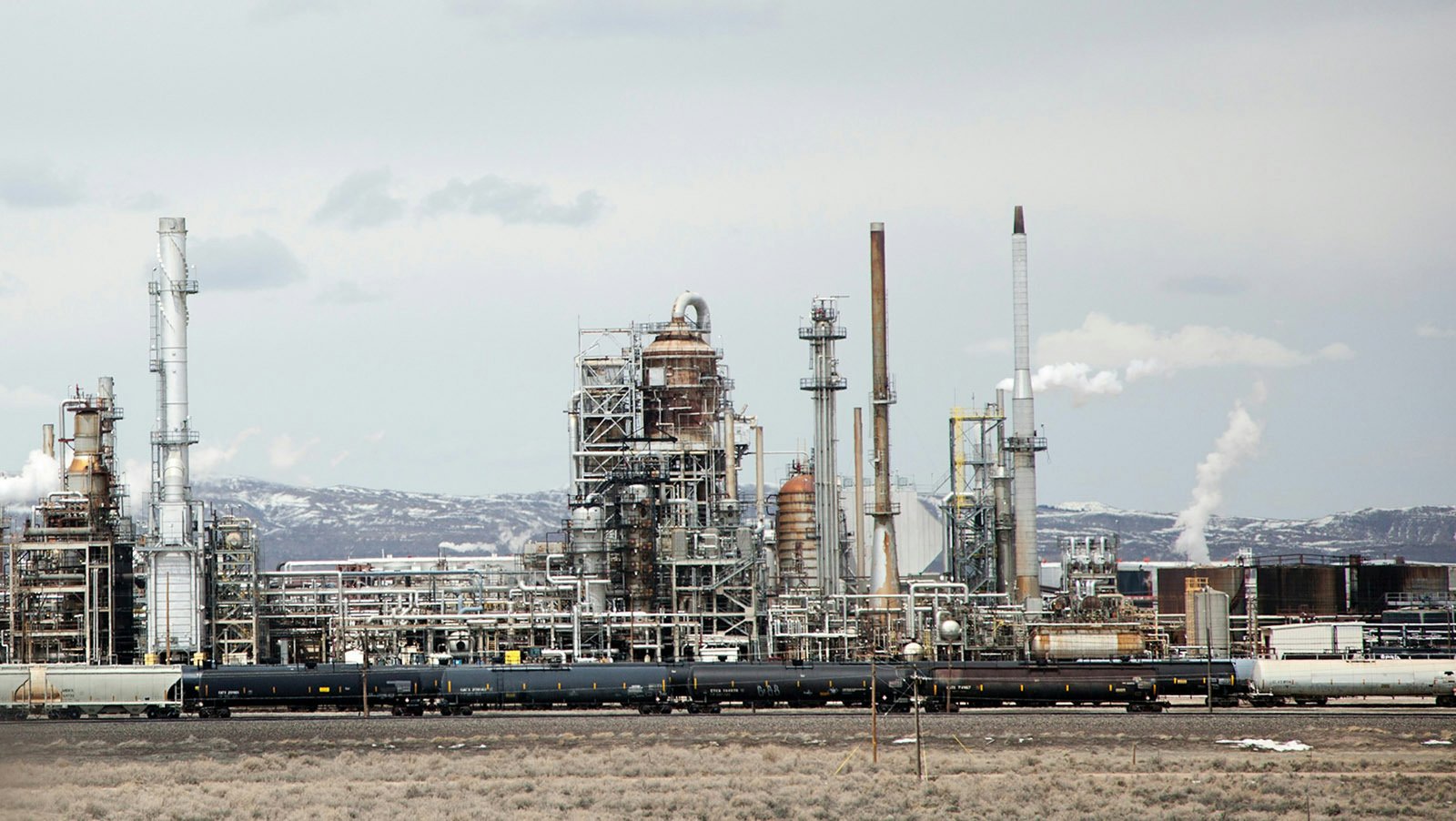
Our work follows the state's industry. Four trona mines operate in Sweetwater County, and Wyoming supplies about 90 percent of the country's soda ash. Coal in the Powder River Basin is changing, with mine property near Wright being rezoned heavy industrial so the tipples, rail lines and buildings can host new tenants. Refineries run at Evansville near Casper and just east of the town of Sinclair. Wind development near Rawlins is planned at a very large scale. Gas support work, power generation and electrical infrastructure fill in the rest.
For utilities and power owners, we build foundations, support buildings, switchgear enclosures, duct banks and access roads. For heavy industry and minerals plants, we build equipment pads, process-support buildings, maintenance shops and warehouses. We work on plants that are running, which brings us to the harder part of the job.
Working inside an operating plant
Building in a live facility is its own discipline. We do it with a short list of rules.
Every worker attends the owner's safety orientation before entering. Work areas are fenced, and access is controlled. Hot work, excavation and lifts need permits and sign-off. Tie-ins happen in the outage window, not before. Anything that can be built ahead of time is built ahead of time, off the critical path, so the shutdown is spent connecting and not constructing.
That is the heart of our phased construction on occupied industrial sites. We break the project into small moves, each with its own barrier, its own access route and its own turnover. A turnaround may last days. A pad for new equipment may need to be cured and ready before it starts. We work backward from the outage date and tell you early if the date is not realistic.
More About Our Work
Mobilization, laydown and remote camps
Remote sites need a mobilization plan before they need a schedule. Where do crews sleep? How far is the nearest fuel? Who feeds them? Can a heavy-haul truck make the last mile in April? We answer those questions in preconstruction and price them openly. On projects far from towns, that can mean a crew camp, shuttle runs or a longer rotation, and the cost is shown on its own line.
Material needs somewhere to sit. We lay out stabilized laydown yards early, with drainage, a base that carries loaded trucks through spring thaw and room for cranes to set up and turn. A laydown yard that turns to mud in March stops the whole job, and we build ours to avoid that. Heavy-haul access roads, truck courts and dock aprons get the same treatment: base thickness, drainage and snow storage are settled on the drawings.
We also plan for long-lead items, since a transformer, a pre-engineered building package or a piece of process equipment can take months to arrive. Procurement tracking sits beside the construction schedule so nobody discovers a late delivery after the crew has mobilized.
The Cheyenne side
The southeast corner of the state is a different market. Cheyenne sits where I-25 meets I-80, with both Union Pacific and BNSF yards in town. Cheyenne Business Parkway covers 900 acres inside the city limits with utilities in place. North Range Business Park offers 620 acres with immediate access to I-80. The Cheyenne Logistics Hub covers about 2,000 acres southwest of the city with access to both railroads. The local development agency reports a collective $3.1 billion invested by data center companies in the area, and an $800 million, 715,000 square foot campus was announced in south Cheyenne in July 2024.
We build for that market as well. Data center work includes civil packages, utilities, support buildings, generator pads and the concrete and steel that shell them. We also build manufacturing plants, warehouses and distribution buildings. The conversation here is about power, fiber, water, schedule and security, and the same weather applies. Wind in Cheyenne is no gentler than anywhere else on the plains.
Further west, Evanston has a data center project approved about 12 miles east of town, at a scale that would require a large trade workforce. As of the latest report we reviewed, construction had not started. We follow projects like that because they affect labor, housing and road capacity for every other job in the region.
Where we work
We work across the state. In the southwest, Rock Springs and Green River sit on I-80 and the Union Pacific line near the trona plants. Rock Springs reports a steady trona workforce of 2,296 in 2025, and operators with a steady workforce plan capital work in cycles. We plan in cycles too. In the northeast, Gillette and Wright serve coal, carbon products and new industrial uses of former mine property. In the center, Casper holds the refinery and oilfield services. Laramie, at 7,165 feet, is a university and technology town with its own industrial park and 48 inches of snow a year. Rawlins, Evanston, Sheridan, Riverton and many smaller towns complete the map.
Each location page on this site covers that market in more detail. If your site is not listed, ask. The drive may be long, but the method does not change.
What we deliver
What we deliver
Our scopes range from site clearing and mass grading to finished buildings. We build ground-up industrial facilities, design-build packages, structural steel erection, tilt-wall and pre-engineered buildings, industrial slabs, drilled pier foundations, site utilities, stormwater systems, fire water loops, truck courts, rail spur improvements and security fencing. We also handle renovations, tenant improvements, demolition and slab replacement.
We schedule and supervise the work that controls schedule and quality and manage trade partners on the rest. Either way, one project team is accountable for safety, cost and schedule. Closeout is part of the contract: commissioning, punch lists, as-built drawings and training handed to the owner's operators before we demobilize.
Common Questions
Do you work on remote Wyoming sites?
Yes. We plan mobilization, lodging or camp arrangements, fuel and material delivery in preconstruction, and show those costs on their own line so the owner sees the real price of distance.
Can you build inside an operating refinery or trona plant?
Yes. We work through the owner's safety orientation, permit system and outage calendar, build ahead of the shutdown where possible and keep tie-ins inside the agreed window.
How do you handle winter construction?
We schedule exterior and structural work for the months that allow it, move interior and below-grade work into cold weather, and use heat, blankets and ground protection when concrete must be placed in winter.
Do you build data center support work near Cheyenne?
We build the civil, utility, concrete, steel and support-building packages around data center campuses, coordinating power, fiber and security requirements with the owner and the design team.
Who is accountable on a multi-trade industrial project?
One project team is accountable for safety, cost and schedule. We schedule and supervise the work that controls the critical path and manage trade partners on the remainder.